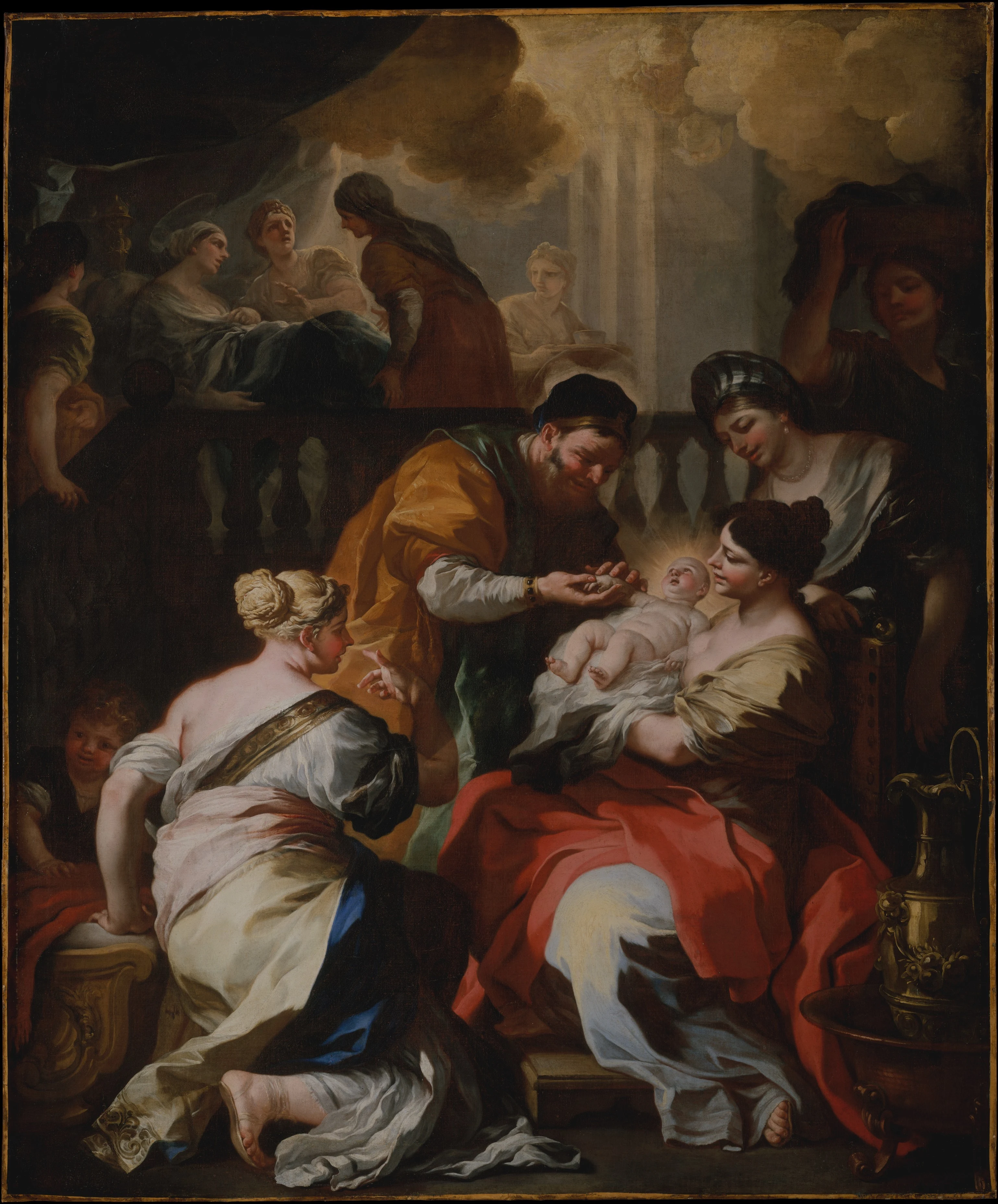
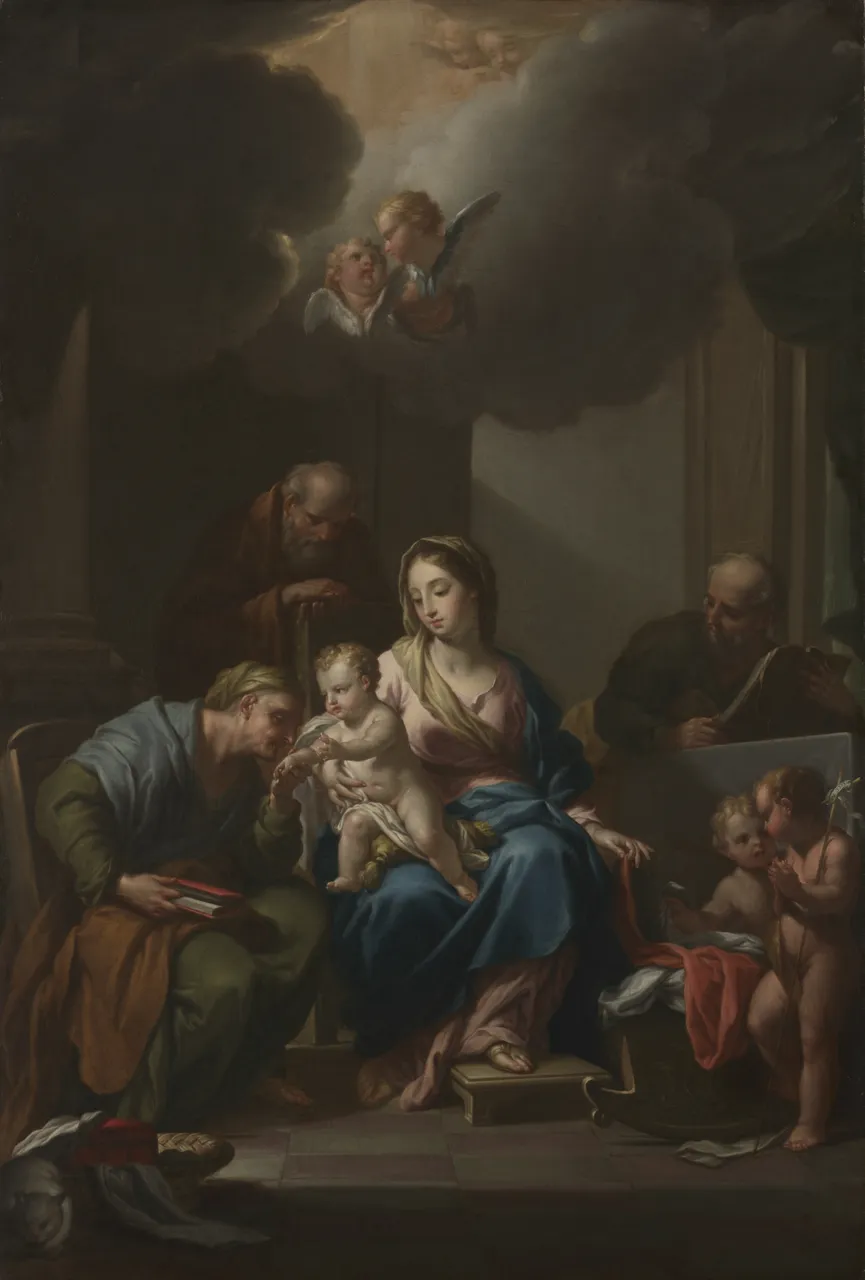
Painted around 1690, this work depicts the birth of the Virgin Mary, daughter of Saints Joachim and Anne, according to an ancient Christian tradition recorded in the Protoevangelium of James, a second-century apocryphal text. In the foreground, the newborn Mary is presented to her father, Saint Joachim, who bends affectionately over her, while other women attend to the child. In the background, surrounded by light filtering through the clouds, Saint Anne rests in bed after giving birth, accompanied by her attendants. The composition transforms a sacred event into a familiar domestic scene, bringing it closer to everyday life. Originally conceived as an altarpiece, the painting was created in Naples, then under Spanish rule, and reveals influences from Peter Paul Rubens and Luca Giordano. Its attribution has an interesting history: when the Metropolitan Museum acquired it in 1906, it was believed to be a painting by Giordano. It was not until the 1970s that scholars began attributing it to Francesco Solimena, an identification that the museum maintains today.
Pintada por volta de 1690, a obra representa o nascimento da Virgem Maria, filha de São Joaquim e Santa Ana, segundo uma antiga tradição cristã registrada no Protoevangelho de Tiago, texto apócrifo do século II. Em primeiro plano, a recém-nascida é apresentada a seu pai, São Joaquim, que se inclina carinhosamente sobre ela, enquanto outras mulheres participam dos cuidados com a criança. Ao fundo, envolvida por uma luz que atravessa as nuvens, Santa Ana repousa em seu leito após o parto, acompanhada por suas serviçais. A composição transforma um acontecimento sagrado em uma cena familiar, aproximando-o da vida cotidiana. Originalmente concebida como pintura de altar, a obra foi realizada em Nápoles, então pertencente à monarquia espanhola, e revela influências de Peter Paul Rubens e Luca Giordano. Sua autoria possui uma história interessante: quando foi adquirida pelo Metropolitan Museum em 1906, acreditava-se que fosse uma pintura de Giordano. Somente na década de 1970 os estudiosos passaram a atribuí-la a Francesco Solimena, identificação mantida atualmente pelo museu.
Pintada hacia 1690, esta obra representa el nacimiento de la Virgen María, hija de san Joaquín y santa Ana, según una antigua tradición cristiana recogida en el Protoevangelio de Santiago, texto apócrifo del siglo II. En primer plano, la recién nacida es presentada a su padre, san Joaquín, que se inclina cariñosamente sobre ella, mientras otras mujeres participan en los cuidados de la niña. Al fondo, rodeada de una luz que atraviesa las nubes, santa Ana descansa en su lecho después del parto, acompañada por sus sirvientas. La composición transforma un acontecimiento sagrado en una escena familiar, acercándolo a la vida cotidiana. Originalmente concebida como pintura de altar, la obra fue realizada en Nápoles, entonces bajo dominio español, y revela influencias de Peter Paul Rubens y Luca Giordano. Su atribución tiene una historia interesante: cuando el Metropolitan Museum la adquirió en 1906, se creía que era una pintura de Giordano. No fue hasta la década de 1970 cuando los estudiosos comenzaron a atribuirla a Francesco Solimena, identificación que el museo mantiene actualmente.